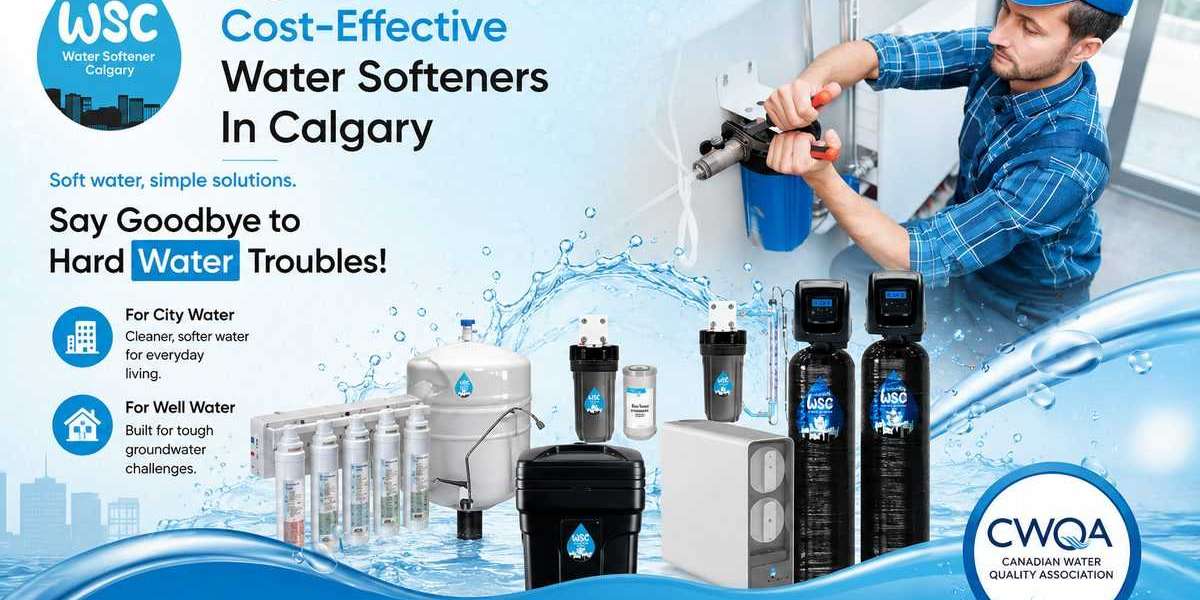

Water quality is an important part of maintaining a comfortable and functional home. Families use water every day for drinking, cooking, bathing, laundry, cleaning, and operating household appliances. When water contains elevated levels of minerals, homeowners may begin noticing spots, residue, scale, or buildup around fixtures and equipment. These signs can encourage property owners to learn more about water treatment and discover which technology may be appropriate for their individual needs.
Understanding the source of water, identifying its characteristics, and choosing suitable treatment equipment can make household water management much easier. For Calgary homeowners, having access to reliable information about water softening, conditioning, filtration, and related technologies can help create a practical approach to improving everyday water quality.
Understanding Water Quality in a Calgary Home
Water quality is not identical in every property. The source of the water, plumbing infrastructure, mineral content, household consumption, and existing treatment equipment can all influence how water behaves inside a home.
One common concern is hard water. Hard water contains dissolved calcium and magnesium. These naturally occurring minerals can become noticeable when they accumulate on surfaces or interact with household cleaning products.
Homeowners may notice white deposits around faucets, spots on glass shower doors, scale on showerheads, or residue around sinks. Internal components of water-using appliances can also be exposed to these minerals.
Understanding the cause of these issues is the first step toward finding an appropriate treatment solution.
What Causes Hard Water?
Hardness develops when water comes into contact with mineral-rich geological formations.
As water travels through soil and rock, it can dissolve minerals and carry them into the water supply. Calcium and magnesium are the primary minerals responsible for conventional water hardness.
The concentration can vary depending on the source and local conditions.
Hard water is generally not considered a health problem simply because it contains calcium and magnesium, but it can create household maintenance challenges.
The higher the hardness level, the more noticeable mineral deposits and scale may become.
Common Signs of Hard Water
Homeowners often discover hard water through visible changes around the house.
White spots may appear on faucets and sinks. Shower glass can develop cloudy mineral residue, while showerheads may become covered with deposits.
Soap and shampoo can also behave differently in hard water. Some homeowners find that products do not lather as easily or that cleaning requires additional effort.
Water heaters and appliances may experience internal mineral exposure as well.
These signs do not automatically prove that hardness is the only water quality issue, which is why testing is important before choosing treatment equipment.
Why Water Testing Matters
Water testing provides a clearer understanding of what is actually present in the water.
A hardness test can determine the concentration of calcium and magnesium. Additional testing can identify sediment, iron, manganese, chlorine, odor, and other characteristics that may require different treatment technologies.
This information helps homeowners avoid selecting equipment based on assumptions.
For private well owners, testing is particularly valuable because groundwater characteristics can differ significantly between properties.
Once the water has been evaluated, homeowners can make more informed decisions about softening, conditioning, filtration, or specialized treatment.
How a Traditional Water Softener Works
Traditional water softeners use ion exchange technology.
Inside the treatment tank is a specialized resin that attracts calcium and magnesium. As hard water passes through the resin, hardness minerals are captured and exchanged for sodium ions.
Over time, the resin becomes saturated and must be regenerated.
During regeneration, a brine solution restores the resin so it can continue treating incoming water.
Modern systems may use demand-based regeneration, allowing the equipment to regenerate according to household water consumption instead of relying solely on a fixed schedule.
Understanding Water Softening
Water softening is different from simply filtering water.
A conventional softener is designed specifically to reduce hardness minerals.
This can change the characteristics of the water throughout the home and may reduce the formation of traditional mineral scale.
Homeowners may notice differences in bathroom cleaning, laundry, soap performance, and appliance maintenance after installing a properly configured softener.
The exact results depend on the water hardness, equipment design, household consumption, and other factors.
Salt-Free Water Conditioning
Salt-free conditioning provides another approach to hard-water management.
Many salt-free conditioners do not remove calcium and magnesium from water. Instead, they are designed to reduce the tendency of these minerals to form conventional scale.
Certain technologies encourage hardness minerals to form microscopic crystals that are less likely to attach to plumbing surfaces.
This means the water remains hard from a chemical perspective.
Homeowners considering conditioning should therefore understand that scale control and hardness removal are different objectives.
Choosing Between Softening and Conditioning
The choice between softening and conditioning depends on what the homeowner wants to accomplish.
If the primary objective is to reduce calcium and magnesium, traditional ion exchange softening may be more appropriate.
If the primary concern is scale management and the homeowner prefers to avoid conventional salt regeneration, a salt-free conditioner may be worth evaluating.
Neither approach should automatically be considered suitable for every property.
Water testing, household needs, maintenance preferences, and expected results should all be considered.
Managing Scale Around Plumbing Fixtures
Mineral scale can be particularly frustrating because it repeatedly returns after cleaning.
Faucets, showerheads, sinks, and other fixtures can accumulate deposits when hard water evaporates from their surfaces.
Water treatment can help address the underlying conditions that contribute to these deposits.
A softener reduces the hardness minerals responsible for traditional scale, while a conditioner may reduce the tendency of those minerals to attach to surfaces.
The appropriate choice depends on the desired outcome.
Bathroom Maintenance and Water Treatment
Bathrooms are among the areas most frequently exposed to household water.
Shower glass, faucets, tiles, tubs, and showerheads can all experience mineral deposits.
Reducing hardness or controlling scale can help minimize recurring buildup.
Homeowners will still need to clean surfaces regularly, but appropriate water treatment can make certain maintenance tasks easier.
A water treatment system should therefore be viewed as part of a broader household maintenance strategy rather than a replacement for cleaning.
Kitchen Fixtures and Hard Water
Kitchen faucets and sinks are also exposed to water throughout the day.
Water droplets can evaporate and leave minerals behind, creating spots and residue.
Managing hardness can help reduce the amount of mineral material left behind on these surfaces.
However, homeowners should distinguish between water softening and drinking-water filtration.
A softener primarily addresses hardness. If a homeowner has specific concerns about drinking water, a suitable filtration system may be needed separately.
Protecting Water Heaters
Water heaters repeatedly process and heat household water.
When water contains significant hardness, minerals may accumulate inside the equipment under certain conditions.
Scale buildup can increase maintenance concerns and may affect heat transfer.
Reducing hardness before water reaches the water heater can help limit exposure to calcium and magnesium.
Conditioning may also provide scale-management benefits depending on the technology and water chemistry.
Regardless of treatment choice, regular water heater maintenance remains important.
Supporting Appliance Performance
Water-using appliances can be exposed to the same water conditions as plumbing fixtures.
Dishwashers, washing machines, humidifiers, and other equipment may develop deposits depending on the water chemistry and frequency of use.
Appropriate water treatment can help reduce mineral exposure.
However, treatment should be selected based on the specific problem.
For example, a softener is not automatically a solution for sediment or odor. Different water characteristics may require filtration or specialized treatment.
Laundry and Detergent Considerations
Hard water can influence how detergents interact with water.
Calcium and magnesium can interfere with the performance of cleaning products, potentially affecting laundry results.
When hardness is reduced through conventional softening, some homeowners may notice changes in how fabrics feel and how detergents perform.
Salt-free conditioning does not generally remove the hardness minerals, so it should not be expected to produce exactly the same results.
Homeowners should consider their laundry priorities when evaluating treatment options.
Showering With Treated Water
Water quality can also influence the shower experience.
Hard water may affect how soap and shampoo lather and rinse. Mineral residue can also develop around shower fixtures and glass.
Softened water has significantly reduced levels of calcium and magnesium, which can change how personal care products interact with the water.
Conditioned water may behave differently because the hardness minerals remain present.
Understanding these differences can help homeowners establish realistic expectations before selecting equipment.
Whole-House Water Treatment
Whole-house treatment systems are installed on the main water supply line.
This allows water to receive treatment before reaching bathrooms, kitchens, laundry areas, appliances, and other fixtures.
Whole-house softening can provide consistent hardness reduction throughout a property.
Whole-house conditioning can provide a broader scale-management approach.
Additional filtration can be included when testing identifies sediment, chlorine, iron, odor, or other concerns.
Point-of-Use Drinking Water Filtration
Some homeowners want additional treatment specifically for drinking and cooking water.
Point-of-use filtration can be installed at a kitchen faucet or another selected location.
This allows targeted treatment without requiring the entire home's water supply to pass through a drinking-water filtration system.
Depending on the water quality, a point-of-use filter can complement whole-house softening or conditioning.
The filter technology should be selected according to the substances or characteristics identified during testing.
Private Well Water
Private well owners may have more complex water treatment requirements.
Groundwater can contain hardness minerals, sediment, iron, manganese, sulfur-related compounds, and other substances.
A softener may address hardness, while filtration or specialized treatment may be necessary for other concerns.
Because well-water chemistry can change over time, periodic testing can be beneficial.
A treatment system should be designed around the actual water analysis instead of assumptions about the property.
Correct System Sizing
The size and capacity of treatment equipment should match the home's requirements.
Household size, water consumption, hardness level, peak flow rate, and plumbing configuration can all influence system selection.
An undersized system may struggle during periods of high demand.
An oversized system may increase equipment and operating costs unnecessarily.
Professional sizing can help homeowners find a balance between treatment performance, efficiency, and long-term value.
Professional Installation
Correct installation is essential for reliable water treatment.
The equipment needs to be connected properly to the incoming water supply, drainage, and existing plumbing.
Flow direction, bypass arrangements, valves, and control settings must be configured correctly.
Poor installation can result in leaks, inconsistent performance, or unnecessary service issues.
Professional installation can help ensure that the system is integrated properly into the property.
For homeowners researching water treatment in Calgary, watersoftenercalgary can provide useful information about residential softening, conditioning, filtration, and related solutions. If you want to learn more about available treatment options and understand which approach may fit your home's requirements, check website resources can provide a starting point for exploring water quality solutions.
Maintaining Your Water Treatment Equipment
Regular maintenance is essential for long-term system performance.
Salt-based softeners require monitoring of the salt supply and brine tank.
Filters may need periodic cleaning or replacement.
Salt-free conditioning systems can have treatment media and components that eventually require inspection or replacement.
Homeowners should follow the manufacturer's maintenance recommendations and monitor the system for changes in performance.
Unusual noises, leaks, warning indicators, or changes in water quality can indicate that professional attention is required.
Considering Long-Term Costs
The purchase price of a treatment system is only one part of the total investment.
Homeowners should consider installation, maintenance, replacement parts, salt consumption, water usage, and equipment lifespan.
Different treatment technologies have different operating requirements.
A correctly sized system can help avoid unnecessary operating costs while providing the treatment capacity required by the household.
Looking at long-term ownership rather than only the initial price can help homeowners make a better decision.
Creating a Complete Water Treatment Strategy
An effective strategy begins with identifying the actual water quality concern.
Testing can establish hardness and reveal additional characteristics.
Homeowners can then compare softening, conditioning, filtration, and specialized treatment according to their specific requirements.
Correct equipment sizing and professional installation can support reliable performance.
Regular maintenance and periodic testing can help ensure that the system continues to meet household needs.
Why Professional Advice Can Be Valuable
Water treatment terminology can be confusing, especially when products are marketed using similar language.
Softening, conditioning, filtration, purification, and disinfection are not interchangeable technologies.
A professional assessment can help explain what each system is designed to accomplish.
This can prevent homeowners from purchasing equipment that does not address their actual concern.
Professional guidance can also help determine whether multiple treatment stages are necessary or whether a simpler system is sufficient.
Making an Informed Water Treatment Decision
Every Calgary home has different water treatment requirements.
Homeowners should consider the water source, hardness level, household size, consumption patterns, plumbing configuration, maintenance preferences, and desired results.
Traditional softening can be appropriate when hardness reduction is the primary objective.
Salt-free conditioning may be considered when scale management without conventional salt regeneration is preferred.
Filtration or specialized equipment may be necessary when the water contains other substances that require treatment.
Testing and professional guidance provide a practical foundation for making this decision.
The Importance of Long-Term Water Management
Water treatment should not be viewed as a one-time purchase.
Equipment needs proper installation, maintenance, and occasional evaluation.
Water quality can also change, particularly for private well owners.
Keeping track of system performance and maintaining equipment according to manufacturer recommendations can help protect the investment.
A long-term approach can provide more consistent water quality management throughout the home.
Final Thoughts
Understanding household water quality is the foundation of choosing an effective treatment system. Hard water can contribute to mineral deposits, scale, appliance exposure, and cleaning challenges, while sediment, iron, chlorine, odors, and other characteristics may require different treatment technologies.
Traditional softeners reduce calcium and magnesium, while salt-free conditioners generally focus on scale management. Filtration systems can provide additional treatment when specific water quality concerns are identified.
For Calgary homeowners exploring residential water treatment, watersoftenercalgary can be a useful source of information about available solutions. Before selecting equipment, homeowners should consider water testing, system capacity, installation requirements, maintenance, and long-term operating costs. If you are exploring ways to better understand your home's water quality and treatment possibilities, check website information can be a useful starting point for making a more informed decision.