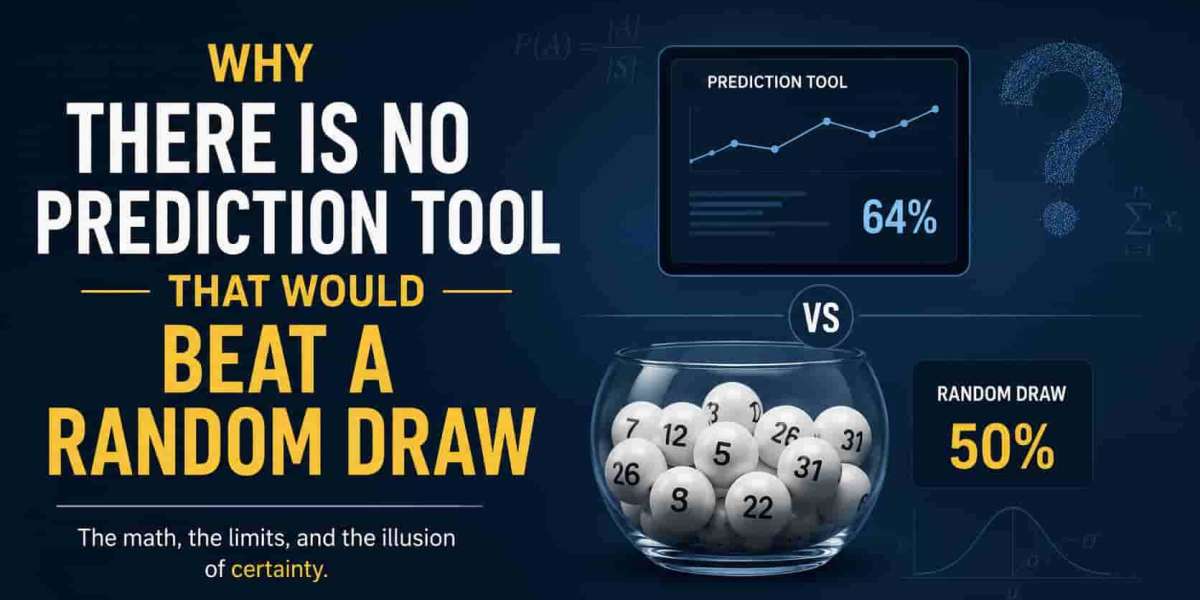

Math Behind the Charts Every "Predictive Software" Consistently Ignores
This is the main reason behind each and every prediction tool in the market. If we have a truly random draw, then there are 1000 variants possible (000 to 999). Moreover, every new draw is completely independent from any previous result. Coin, dice, patti – randomness does not have memory and no matter what information about previous draws you put into your algorithm, it will not give you anything, as a new draw is generated right now. This was proved by statisticians long time ago, and applies to any lottery or matka-style game in the same way.
Why All Those Patterns Which You See in Charts Are So Meaningful, but Actually Aren't
Human brain sees patterns in almost everything – be it a song, birds chirping or any other random noise. This phenomenon is called apophenia, and it is why each time you are looking at some patti chart, you see recurring numbers, hot digits, and lucky slots. Each week some digits appear more often than others, and each month some baji slot seems to be luckier than the rest. However, all these patterns are just noise, not a trend. Clusters and streaks are inherent properties of randomness, and any algorithm trying to make predictions based on the "hot number theory" gives you an illusion of an order behind chaos.
AI and Machine Learning Manipulation in Marketing
In the recent time, many prediction tools have started using phrases like "AI-powered" and "machine learning based" in their marketing campaigns. Very impressive, isn't it? Well, let me tell you something – machine learning algorithms can make predictions only in case of existence of some patterns in data. In case of random data, there is no chance to beat basic probabilities regardless of how many parameters and GPUs you are using in your model. Moreover, in case of random data, your model will overfit and will be unable to work with new draws correctly. Very basics of machine learning.
What Do These Prediction Tools Do?
- They give a list of the most frequent digits, which appeared during the last 30 or 60 days;
- Some of them give trending patti combinations, based on frequency calculations;
- Very few offer colored charts with hot and cold digits;
- None of them actually makes any predictions, they just analyse past data;
- The word "predict" is mostly a marketing term in disguise of analysis.
Sites like https://kolkataff.net/ which post only results and give access to charts are much more reliable than any prediction algorithm.
Gambler's Fallacy Used in Every Single Prediction Algorithm
Almost each prediction algorithm uses some kind of gambler's fallacy – the belief that some digit is due to appear because it did not appear in previous draws. Such logic may seem quite logical, but in case of truly random draws, it is absolutely wrong. Digit which did not appear in last 20 bajis has the same probability to appear in the 21st baji as in the very first one. And draw itself knows nothing about its previous results. Thus, each and every prediction tool which is using the logic of "due numbers" is selling you a well-known mathematical fallacy.
Conclusion
There is no such thing as a prediction tool which could beat a random draw. This is the beauty of Kolkata Fatafat game, and denial of its existence is either self-delusion or a marketing manipulation. Analysing the charts if you want to find any patterns, watching bajis if you want to waste time, but never buying any prediction software which promises you some mathematical advantage where it does not exist. The house always wins in the end, and in case of random games, "the house" is the probability itself.