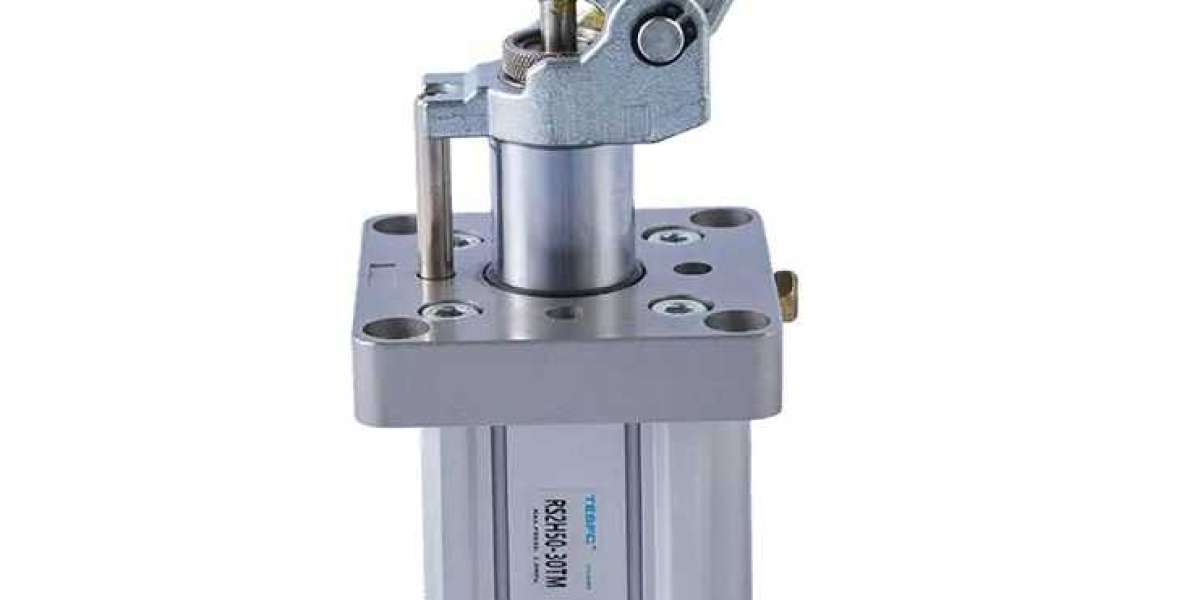

Modern production equipment often relies on repeated movements to transfer parts, position fixtures, open mechanisms, or coordinate different stages of a manufacturing process. Within these systems, a Square Pneumatic Cylinder can provide controlled linear actuation while offering a body shape that may simplify mounting and equipment arrangement. Its practical value depends on how the cylinder interacts with the machine frame, connected components, compressed-air supply, and control system. Considering these relationships early in the design process helps engineers avoid treating an actuator as an isolated component and instead evaluate its role within the complete working mechanism.
The materials used in pneumatic cylinder construction affect durability, maintenance, and compatibility with the working environment. Aluminum alloys are frequently selected for cylinder housings because they combine relatively low weight with useful structural properties and manufacturing flexibility. Surface treatments can help protect exterior surfaces and maintain a consistent finish during regular use. Steel may be used for rods, fasteners, or other parts that experience mechanical contact, while stainless steel can be appropriate where resistance to corrosion is a concern. Internal seals deserve particular attention because they help maintain pressure separation and support smooth piston movement. Their suitability depends on operating conditions, contact surfaces, air quality, and any exposure to lubricants or cleaning agents. Buyers should assess the materials of the complete assembly rather than assuming that the outer housing alone determines product quality.
Selecting an appropriate cylinder starts with examining the machine's movement sequence. Engineers need to understand what the actuator will move, how the moving part is supported, and whether the motion occurs in a clean production area, a dusty workshop, or another demanding environment. The available installation space can influence the choice of body shape, mounting method, and connection arrangement. Designers should also consider how the cylinder will be accessed after installation, since a component that is difficult to inspect may complicate routine servicing. Compatibility with valves, tubing, sensors, and control equipment is equally important. When replacing an existing actuator, checking mounting interfaces and connection positions can help prevent unnecessary modifications. A supplier can assist with reviewing the application details and identifying a configuration that aligns with the machine's mechanical and operational requirements.
A pneumatic cylinder works by directing compressed air into a chamber where pressure acts on a piston. The piston moves along the cylinder body and transfers force through a rod or another connected mechanism. Airflow control determines how the actuator starts, moves, and returns, depending on its design. Sealing elements help maintain the pressure difference needed for motion, while internal guiding surfaces support the movement of the piston assembly. In an automated machine, the cylinder rarely operates alone. Directional valves manage air distribution, flow-control components influence movement behavior, and sensors may communicate the actuator's position to a controller. These elements must function together so that motion occurs at the appropriate stage of the production cycle. Correct alignment and suitable control logic also help reduce unnecessary mechanical stress and inconsistent movement.
Day-to-day usability is shaped by the details that technicians encounter during installation, operation, and servicing. Accessible pneumatic ports can make hose routing more manageable, particularly when multiple actuators share a confined machine space. Clearly arranged mounting points can simplify positioning, while practical access to fasteners supports inspection and replacement. During commissioning, technicians should verify that the actuator travels freely and that the connected mechanism does not introduce unwanted side loads. Routine checks can include examining seals, connections, mounting hardware, and visible signs of wear. Maintaining clean compressed air and following the manufacturer's recommendations can help preserve operating consistency. Maintenance procedures should also account for residual pressure and unexpected movement, allowing technicians to isolate the air supply and secure moving parts before beginning service work.
The external design of a cylinder affects both its appearance and its integration into the surrounding equipment. A square body can complement machine frames built around flat mounting surfaces and organized component layouts. This shape may also make the actuator easier to position alongside guides, fixtures, brackets, or other mechanical elements, depending on the specific construction. Port orientation and the placement of mounting features influence how neatly tubing and accessories can be arranged. Designers should preserve sufficient clearance for the full movement path and avoid placing cables or guards where they could interfere with operation. A consistent exterior finish can contribute to a professional machine appearance, but visual uniformity should remain secondary to structural compatibility, accessibility, and safe operation. Good layout planning balances compactness with the space needed for adjustment and maintenance.
For businesses developing automated machinery, selecting a pneumatic component is part of a wider engineering decision involving mechanical structure, air preparation, control logic, and service planning. Zhejiang Feishengya Pneumatic Components Co., Ltd. supplies pneumatic components for applications involving industrial actuation and linear movement. Buyers evaluating a cylinder can share information about the intended motion, installation arrangement, surrounding conditions, and connections to other equipment to help clarify their requirements. These discussions can support a more practical assessment of component compatibility before a design is finalized. Further information about the company's pneumatic products and solutions is available at https://www.tesfcpneumatic.com/.