
Leadership is often measured by visible outcomes. Revenue increases, organizations grow, teams perform, and institutions achieve their goals. But behind every visible result are systems that influence how those results are created.
Incentives shape behavior. Governance shapes authority. Economic conditions influence opportunity. Organizational structures determine how decisions move through an institution. When these elements work together effectively, they can create momentum. When they are misaligned, even talented leaders can struggle to produce lasting results.
Understanding these underlying forces is becoming increasingly important for today's executives.
This is the foundation of Antomius Wise's work in keynote speaking, workshops, and executive education. His engagements help leaders look beyond immediate circumstances and examine the structural forces that influence decisions, institutions, performance, and long-term impact.
The purpose is not simply to give an audience something to remember.
It is to give leaders a different way to think.
Leadership Beyond the Surface
Many organizational challenges appear to be straightforward.
A company may need stronger performance. An executive team may be struggling to make decisions. A growing institution may find its existing structure difficult to manage. A philanthropic organization may want to create greater impact.
The obvious response is often to focus on the immediate problem.
But the visible problem may only be a symptom.
For example, poor performance may be connected to an incentive system rather than a lack of talent. Slow decision-making may be related to governance rather than leadership capability. Difficulty scaling may result from institutional structures that were designed for a much smaller organization.
This is why leaders need to understand more than what is happening.
They need to understand what is creating the conditions for it to happen.
That shift—from observing outcomes to examining the systems behind them—is central to Antomius Wise's approach.
Making the Invisible Visible
One of Antomius Wise's signature programs, Make the Invisible Visible, explores how incentives, governance, structure, and economic systems influence value creation and institutional growth.
Every organization operates through visible and invisible systems.
The visible side includes strategies, departments, policies, budgets, and leadership roles. The less visible side includes incentives, informal influence, institutional relationships, economic dependencies, and patterns of decision-making.
The second category can be just as influential as the first.
When leaders understand these forces, they can begin to identify why certain outcomes continue to appear.
Instead of repeatedly addressing the same symptoms, they can examine the structure producing those symptoms.
This approach encourages leaders to ask better questions:
- What incentives are influencing current behavior?
- Where does decision-making authority actually exist?
- How is accountability distributed?
- What structural barriers are limiting growth?
- Which economic forces are influencing the organization?
- Where can institutional leverage create greater value?
The answers can reveal opportunities that are difficult to see through a conventional leadership lens.
Executive Education That Changes Perspective
Executive education should do more than add information to an already knowledgeable audience.
Senior leaders have access to reports, research, consultants, market intelligence, and years of professional experience. What they often need is a framework for connecting those pieces.
Antomius Wise's programs are designed to help leaders develop that perspective.
Through keynotes, workshops, and executive programs, participants are encouraged to examine familiar challenges through the lenses of structure, governance, incentives, economics, and institutional systems.
The objective is not to provide a universal formula for leadership.
Instead, it is to develop mental models that can be applied when circumstances change.
A useful mental model can help a leader recognize a structural problem before it becomes a larger organizational issue. It can also encourage executives to consider consequences beyond the immediate decision.
In complex environments, that type of awareness can be invaluable.
Strategic Philanthropy With a Broader View
Philanthropy is frequently associated with generosity and charitable giving. Yet for foundations, advisors, and institutional leaders, its potential can extend much further.
Antomius's Strategic Philanthropy Economic Impact program explores philanthropy through the broader concepts of governance, economic infrastructure, and long-term institutional value.
This perspective encourages leaders to consider what happens beyond the initial contribution.
Does the investment strengthen an institution?
Does it help develop sustainable infrastructure?
Can it create lasting economic value?
Does the governance structure support long-term impact?
These questions can change how leaders think about philanthropic strategy.
Rather than evaluating impact only through immediate results, organizations can consider how their resources interact with the larger systems around them.
For philanthropic networks, foundations, and wealth-advisor communities, this can create a more strategic conversation about how capital and institutional influence can contribute to lasting outcomes.
Leadership in Complex Environments
Today's leaders rarely have the luxury of operating in predictable conditions.
Markets change. Regulations evolve. Stakeholder expectations shift. Organizations expand. New risks appear. Technology transforms industries. Decisions made today can have consequences that become visible years later.
This environment requires a different approach to leadership.
Leadership Inside Complex Systems focuses on decision-making, accountability, discipline, and structural awareness when the stakes are high.
In a complex system, one decision can influence several other parts of the organization.
Changing an incentive can change behavior.
Changing authority can change accountability.
Changing a process can affect culture.
Changing resource allocation can influence long-term priorities.
Leaders who understand these relationships are better positioned to anticipate unintended consequences and make more deliberate decisions.
The goal is not to eliminate complexity.
It is to learn how to operate within it.
From Professional Football to the Secret Service
Antomius Wise also brings lessons from two demanding professional environments into his leadership work.
His From the Field to the Secret Service keynote explores his journey from professional football to the U.S. Secret Service and the lessons those experiences provided about pressure, preparation, adaptability, purpose, and performance.
Professional athletics is an environment where preparation is constantly tested. Performance must be delivered under pressure, and individuals must understand how their actions affect the larger team.
Federal service introduces another form of high-stakes responsibility, requiring discipline, situational awareness, accountability, and an understanding of institutional authority.
Although the environments are very different, both demonstrate the importance of preparation and adaptability.
High performance is not something that suddenly appears when pressure arrives.
It is developed before the pressure begins.
That lesson applies equally to executive teams, entrepreneurs, and institutional leaders.
Conversations Built for the Right Audience
No two leadership environments are exactly alike.
An executive leadership team may be navigating organizational growth and governance. Wealth advisors may be thinking about institutional relationships and long-term value. Founders may be transitioning from building a business to building a lasting organization. Universities and associations may be bringing together audiences to explore broader questions about leadership and institutions.
Antomius Wise's programs are suited for a range of audiences, including:
- Executive leadership teams
- Wealth advisors and trust networks
- Chambers and civic leadership circles
- Philanthropic networks and foundations
- High-income founders and entrepreneurs
- Universities and academic convenings
- Financial services and insurance firms
- Private executive groups
Engagements can take the form of keynote presentations, workshops, executive programs, or multi-session educational experiences.
The format may vary, but the intention remains the same: create a conversation that is relevant to the audience and useful long after the engagement ends.
Connecting Leadership With Institutional Thinking
Some of the most important leadership insights appear when traditionally separate subjects are considered together.
Leadership is influenced by governance.
Governance is influenced by incentives.
Economic structures influence institutional opportunities.
Philanthropic decisions can influence economic infrastructure.
Organizational structures influence performance.
These relationships create a larger picture of how institutions operate.
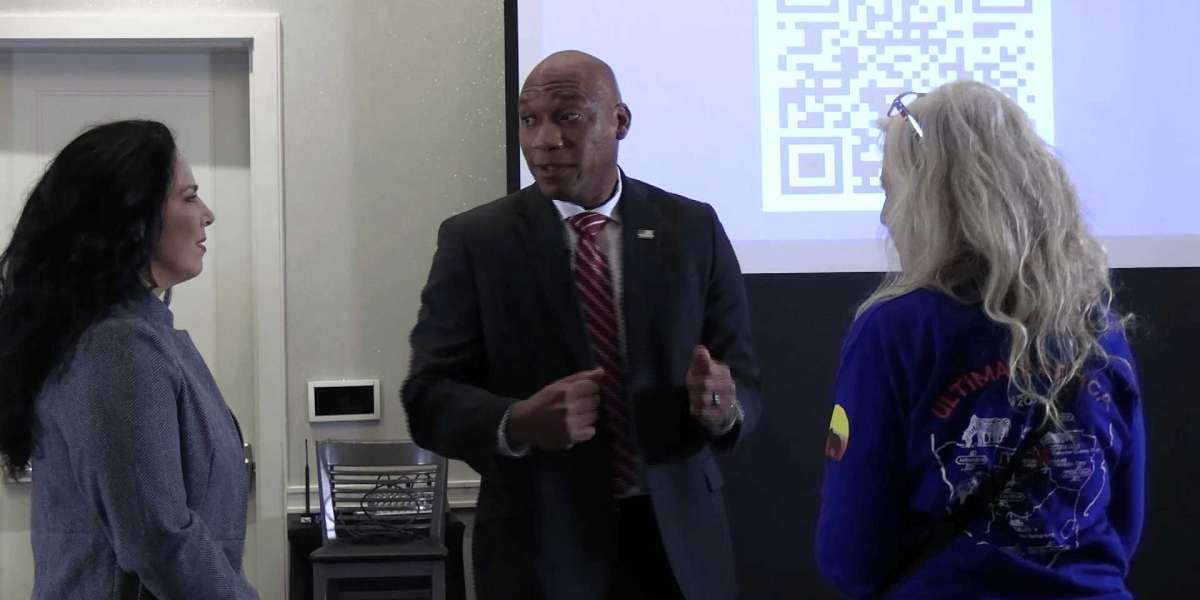
Antomius Wise brings these ideas into executive and academic environments, including a recent executive education engagement at George Washington University. The engagement brought institutional systems, strategic philanthropy, governance, economic structure, and leadership into a shared conversation.
This type of work demonstrates that executive education does not have to remain limited to traditional management topics.
It can explore the larger systems that determine how organizations function and how leaders create lasting value.
The Goal Is Better Thinking
The success of a leadership program should not be measured only by audience engagement during the event.
Its real value can emerge afterward.
Perhaps an executive begins questioning an assumption that previously went unchallenged. Perhaps a leadership team recognizes a structural problem behind a recurring issue. Perhaps a philanthropic organization begins evaluating impact through a longer-term institutional lens.
These are the changes that make education meaningful.
Antomius Wise's keynotes, workshops, and executive programs are designed to encourage precisely this kind of shift.
They provide leaders with frameworks for understanding the forces beneath visible outcomes and navigating environments where simple answers are rarely sufficient.
Ultimately, effective leadership is not only about making decisions.
It is about understanding the environment in which those decisions are made.
When leaders can see the structure behind the outcome, they can begin to influence the outcome itself.
That is the value of systems thinking, and it is the foundation of executive education designed to change how leaders see, think, and lead.