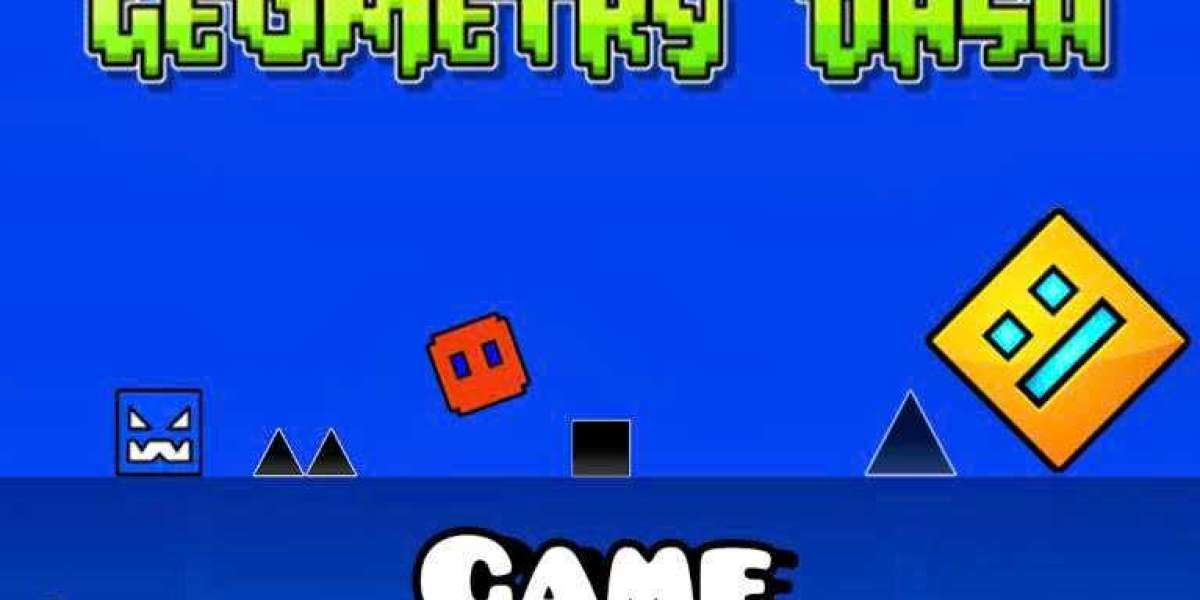

It started, like most obsessions do, with a square. Just a plain, unremarkable little cube sitting on the edge of a geometric ledge. No story, no tutorial, no hand-holding. Just music, a button, and a long, treacherous road ahead. That was my introduction to Geometry Dash, and honestly, it took me all of ten seconds to understand why millions of people lose entire evenings to this deceptively simple game.
The Game: One Jump, One Button, Infinite Frustration
At its core, the premise is laughably straightforward. Your cube moves forward automatically, and you have exactly one job: tap (or click, or press space) to jump. That's it. There are no weapons, no power-ups to collect, no enemies to defeat. The entire game is distilled down to a single act, repeated hundreds of times per level.
But the magic—and the madness—lies in the levels themselves. They're not platforms; they're dense, geometric obstacle courses that pulse in sync with a driving electronic soundtrack. You'll weave through narrow gaps, leap between spikes, and slide across walls that rotate mid-air. The catch? One wrong tap sends you crashing back to the very beginning of the level. There are no checkpoints, no saving your progress mid-run, no mercy. Every death means starting over from zero.
This brutal design is both the game's greatest flaw and its greatest triumph. It turns each level into a marathon of muscle memory. You don't learn a level by thinking your way through it; you learn it by dying over and over until your fingers instinctively know exactly when to move. It's less like playing a game and more like learning a dance routine with your reflexes as the only partner.
Tips: Surviving the Early Chaos
If you're just starting out, here are a few things I wish someone had told me before my cube career began. First, ignore the score and just play the first few beginner levels. They exist to teach you rhythm, not to challenge you, so treat them as a warm-up rather than a competition.
Second, and this is the big one: use headphones. I cannot overstate how much of this game is audio. The music isn't background ambiance—it's a map. The beats and bass drops line up precisely with the obstacles, so if you're playing by sight alone, you're fighting with one arm tied behind your back. Listen, and the gameplay suddenly clicks into place.
Third, know when to walk away. The temptation to "just one more try" is real, and after the fiftieth failed attempt at a single section, your reflexes get sloppy and your frustration skyrockets. The most successful runs often happen after a five-minute break. Step back, breathe, and come back with fresh fingers.
Finally, don't be afraid to practice. In practice mode, you can place checkpoints wherever you want. It removes the grind of restarting and lets you drill the tricky sections over and over. Once a section feels easy, remove the checkpoint and try the whole level in normal mode. You'll be shocked at how far pure repetition can carry you.
The Conclusion: More Than a Test of Skill
Here's the thing I didn't expect: Geometry Dash is as much a lesson in mindset as it is a game. In most games, failure is a punishment. Here, failure is the curriculum. Every death teaches you something—where the gap is, how the rhythm shifts, where you misjudged your timing. Over time, you start to see setbacks not as defeats but as data points.
And that's oddly comforting. In a world where we're told to succeed fast and flawlessly, this little cube game quietly insists that the only way forward is to fall down a lot and get back up. It's frustrating, humbling, and occasionally infuriating. But when you finally clear a level you've been stuck on for days, the rush of satisfaction is unlike anything I've felt in other games.
So if you have a spare ten minutes and a healthy tolerance for self-inflicted irritation, give it a shot. Start slow, wear your headphones, and remember: every expert cube-jumper was once a beginner who just couldn't stop dying. That's the whole secret really. Die a little, learn a lot, and keep tapping.